



















Welcoming a new baby into your life can be a joy, but the physical demands of motherhood often take many by surprise. As someone who practiced yoga for years prior to becoming a parent, I felt prepared for the challenges ahead. However, once I began navigating the realities of motherhood, I soon discovered that those physical demands would push my body in ways I never anticipated.
Nursing sessions turned into marathon events, and carrying my baby in a sling often felt like an Olympic sport. With constant lifting in and out of strollers, swings, and car seats, I quickly experienced aches and imbalances that linger long after the baby years. It turns out, I’m not alone in this struggle. Many parents find themselves facing a range of discomforts that can be traced back to the physicality of mothering.
In a quest for understanding, I reached out to Trudy Messer, PT, a member of the Relax the Back Wellness Council, to shed light on what truly happens to our bodies in that early year of caregiving. Her insights revealed patterns that many parents endure but seldom discuss.
The Patterns Nobody Tells You About
Transformations in posture during the first year of parenthood often go unnoticed. According to Messer, two primary issues emerge: the forward head position with rounded shoulders, a byproduct of looking down at a feeding baby or scrolling on a smartphone, and what she terms the “parent hunch,” a slouched posture that becomes the default during feedings and nap times.
Over time, these seemingly innocuous positions contribute to neck pain, upper trap tightness, and tension headaches. Such discomfort can easily be mistaken for mere fatigue, making it less likely that new moms seek solutions. Signs to watch for include persistent tightness that doesn’t ease with stretching, difficulty sitting upright without slouching, and an imbalance where one side of the body feels stronger while the opposite feels weak.
What the One-Hip Carry is Actually Doing to Your Body
If you’ve noticed your posture shifting while carrying a toddler, you’re not imagining it. Messer explains that when you carry a baby on one hip, your body initiates a chain of compensations. The pelvis tilts to support the baby, your torso leans in the opposite direction, and the ribcage rotates, creating an imbalance in your breathing mechanics. Over time, if this habit is repeated, your movements become asymmetrical, locking in a pattern that can cause discomfort and strain.
Instead of attempting to eliminate the natural act of carrying a child, Messer recommends consciously alternating sides and utilizing structured carriers to better distribute weight. This strategic approach can help mitigate potential long-term effects.
The Cumulative Cost of Feeding Posture
Feeding your baby, whether through nursing or bottle-feeding, is not just a simple action; it’s often a prolonged experience that can lead to significant strain. Messer highlights that when ideal postures are neglected, chronic issues like neck and upper back pain, shoulder impingement, and even fatigue during simple tasks can arise.
The key is not to avoid certain positions but rather to proactively reduce strain. This can be achieved by using properly positioned nursing pillows that elevate the baby, frequent position changes during feeding, and incorporating “movement snacks” — mini stretches aimed at restoring normal body mechanics.
Floor-to-Standing: The Move You’re Doing 30 Times a Day
One of the simplest yet most revealing tasks new parents face is getting up from the floor while holding their baby. Often, people resort to using an asymmetric, spine-heavy method that can place a significant load on the lower back, wrists, and shoulders. Instead, focusing on maintaining proper mechanics through three principles—keeping your baby close, breaking the movement into segments, and utilizing your legs—can create a more sustainable process.
The Stuff That Flies Under the Radar
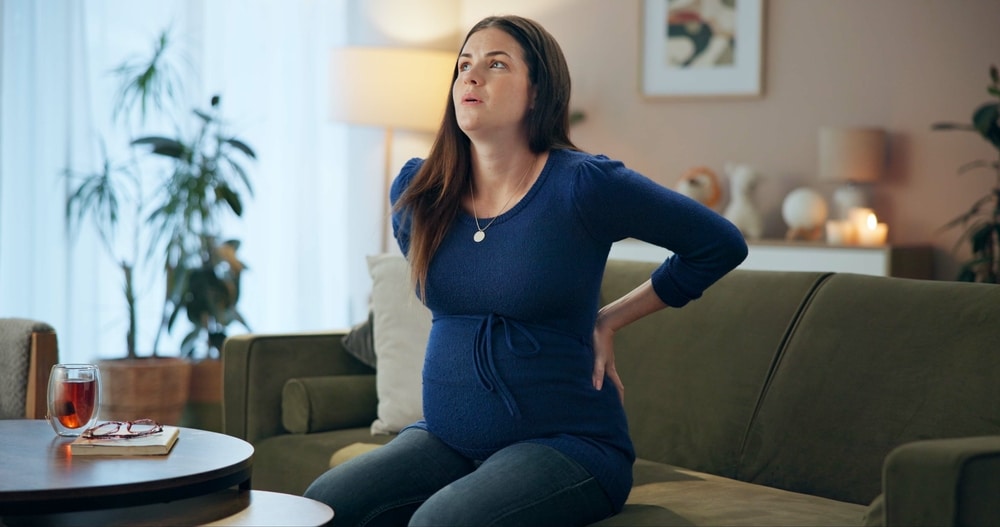
While pelvic floor recovery receives plenty of attention, there’s also a category of “mystery pain” that results from significant changes in movement patterns. Issues may present as upper back stiffness or low back discomfort, often exacerbated by sleep deprivation. The toll of fatigue can lead to altered movement control, making it harder for your body to recover and adapt, which is crucial in the early months of parenthood.
For mothers who underwent C-sections, the movement strategy tends to shift from dynamic pressure management to rigid protection mechanisms, which can hinder recovery. The focus should be on restoring natural breathing and movement patterns to facilitate healing.
If You Have Five Minutes While the Baby Naps
Even with just five minutes to spare during a baby’s nap, there are effective movements to alleviate common strains. Here are two exercises you can try:
90/90 Breathing with Reach: Lie on your back with your feet elevated on a couch or wall. Tuck your pelvis to maintain lower back neutrality, reach your arms toward the ceiling, inhale deeply, and then, during a lengthy exhalation, allow your ribs to settle. This exercise can help reset your breathing and pressure control mechanics.
Supported Thoracic Extension: Find a comfortable seated position with a rolled towel or pillow behind your mid-back. Gently lean back to allow your ribs to expand, opposing the forward curvature that often results from hours of nursing and carrying.
When to Call in a Professional
Most new parents can begin with home remedies such as posture adjustments and gentle exercises if they experience mild symptoms. However, it’s important to seek professional guidance if pain persists for more than a few weeks, spreads to other areas, or impacts basic movements like lifting or carrying. The key is to recognize when your body is not recovering as it should and requires additional support.
The Real Goal of Year One
Ultimately, what every new mom should internalize is not just the physical recovery post-birth, but an understanding of how the everyday tasks of caregiving can reshape your body over time. Discomfort usually signals coordination and load distribution problems rather than outright injuries. The focus, then, should be on maintaining a range of movement options, ensuring your body can adapt without settling into overly dominant patterns.
Learning this foundational knowledge earlier could have significantly altered my approach to motherhood and self-care. Accepting that my body was not broken but simply adapting to its new role in my life was a pivotal realization.