



















Deciphering your child’s first assessment begins with a simple realization: the days of A, B, and C letter grades are largely gone for the youngest learners. Most modern school districts have transitioned to a standards-based model. This approach highlights how a student is currently performing in relation to specific year-end goals rather than comparing them to their classmates.
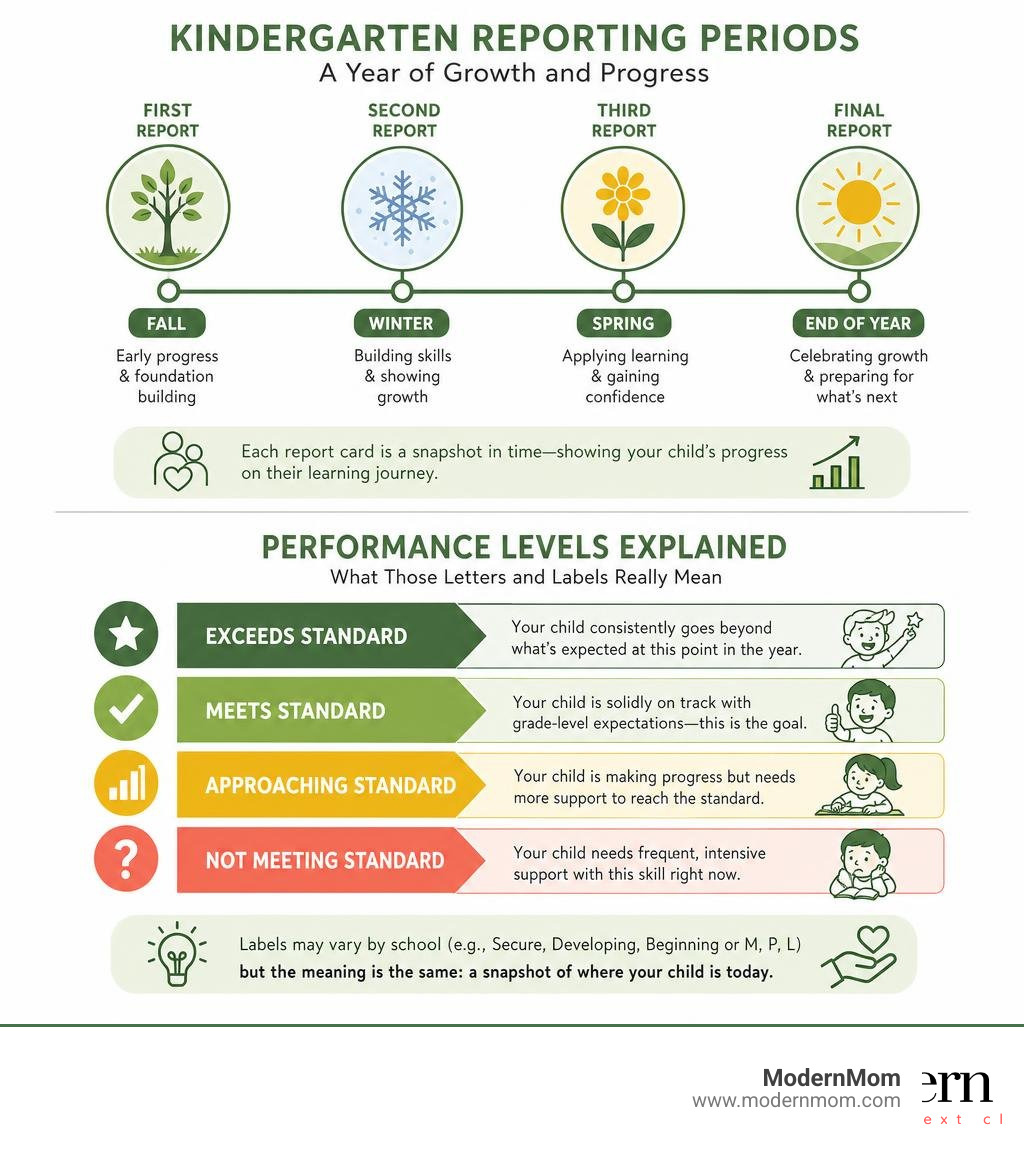
If you are scanning a fresh report card, here is a simplified look at what those performance markers typically signify:
| Level | Interpretation |
|---|---|
| Exceeds Standards | The student is consistently performing above the current expectations for this time of year with high independence. |
| Meets Standards | The student is exactly where they need to be. They are demonstrating solid mastery of grade-level skills. |
| Approaching Standards | The student is showing growth but still requires teacher guidance or extra practice to reach the goal. |
| Not Meeting Standards | The student is currently struggling with this specific skill and needs more intensive, focused support. |
You may encounter different acronyms depending on your local district—such as Secure (SC), Progressing (P), or Beginning (BG)—but the core philosophy remains the same. These marks are a “snapshot in time,” capturing where your child stands today on their developmental journey, not a final verdict on their academic potential.
Opening that first official envelope can feel overwhelming, especially when it’s filled with educational jargon and unfamiliar codes. It is important to remember that these reports are designed to be a roadmap for growth. By understanding how to translate these assessments, you can better support your child’s transition into the world of formal schooling.
Navigating the First Official School Assessment
Receiving a kindergarten report card is a significant milestone for parents and children alike. It marks the shift from the play-based focus of preschool to the more structured academic expectations of elementary school. It is natural to feel a mix of excitement and curiosity—and perhaps a touch of nerves—when reviewing these updates.
Unlike the simple checkmarks of the past, today’s assessments are comprehensive looks at a child’s developmental progress. These reports are usually issued at regular intervals throughout the year to ensure parents stay informed about their child’s evolving skills and social adjustments.
Why Kindergarten Grades Look Different Than Traditional Report Cards
Most primary educators now utilize Standards-Based Instruction and Reporting (SBIR) instead of traditional grading. This system is designed to provide a more accurate picture of what a child can actually do. Rather than receiving an average grade for “Math,” your child is assessed on specific benchmarks, such as the ability to count to 20 or recognize geometric shapes.
A key element of this system is the “point-in-time” assessment. Expectations for a five-year-old in October are very different from the expectations in May. Therefore, a student might be “meeting the standard” in the fall, but as the difficulty of the curriculum increases, their marks will reflect their ability to keep pace with those rising requirements.
Many schools provide an initial progress update in late autumn, often around November. These early check-ins frequently use a simplified three-tier scale to indicate whether a child is adapting well to the classroom routine and initial academic concepts.
A Breakdown of Common Kindergarten Scoring Codes
When you sit down to review the report, you’ll see specific codes that describe academic proficiency. For many parents, the goal is to see a “Level 3” or “Meets Standard” mark. This is the “gold standard” for kindergarten; it means your child is performing exactly at the level expected for their age and term.
To help you understand the variations used across different school systems, refer to this comparison table:
| Performance Code | Common Variations | What It Tells You |
|---|---|---|
| Exceeds Standard (E / M+) | Extending / Advanced | The child applies skills in new ways and works independently beyond the grade level. |
| Meets Standard (M / SC) | Secure / Proficient | The child consistently demonstrates the expected skill for this point in the year. |
| Approaching Standard (P / DV) | Developing / Progressing | The child is beginning to grasp the concept but still needs help or reminders. |
| Not Meeting Standard (L / BG) | Beginning / Limited | The child is struggling to master the skill and requires significant teacher intervention. |
These scores are generally not cumulative. This means the report card focuses on the work the child is doing during that specific term, giving you a real-time look at their current strengths and areas for improvement.
Essential Academic and Developmental Skills for Five-Year-Olds
Kindergarten is a season of rapid transformation. Teachers evaluate a broad spectrum of skills, ranging from academic mastery to physical coordination. The goal is to monitor the development of the “whole child.”
Standard report cards typically cover these primary areas:
- Literacy and Reading: Identifying story elements like characters and setting, retelling plots, and demonstrating basic comprehension.
- Early Writing: Developing a proper pencil grip, writing their name, and using “invented spelling” (phonetic spelling) to communicate ideas.
- Mathematics: Counting toward 100, recognizing numerals, and understanding one-to-one correspondence (the idea that one number represents one specific object).
- Science and Discovery: Making basic observations about the natural world, including weather patterns and the life cycles of plants or animals.
- Social Studies: Learning about community roles, families, and basic classroom citizenship.
- Motor Skill Development: This includes fine motor skills (using scissors and buttons) and gross motor skills (running, jumping, and physical coordination).
Building Literacy: Phonics, Sight Words, and Reading Goals
Foundational reading skills are a major priority in the kindergarten classroom. Teachers focus heavily on phonics, which helps children link specific sounds to letters. This is the “code-breaking” phase of learning to read.
In addition to phonics, students work on “sight words”—high-frequency words that often don’t follow standard spelling rules (like “said” or “where”). By the end of the kindergarten year, the goal is for students to recognize approximately 52 of these words instantly. This automatic recognition allows them to read more fluidly and focus on the meaning of the text.
While the target for independent, fluent reading is usually the end of first grade, most kindergarteners are expected to reach an instructional reading Level D by the time they head into summer break. This level typically involves reading simple sentences with supportive illustrations.
Evaluating Social Growth and Classroom Habits
While the academic scores show what your child is learning, the teacher’s comments and behavior ratings show how they are interacting with the school environment. In many ways, these social-emotional markers are the most important indicators of future success in the early years.
Many educators use the C.A.R.E.S. framework to assess these vital “soft skills”:
- Cooperation: The ability to work with others and share.
- Assertion: How a child asks for help or advocates for their needs.
- Responsibility: Taking care of their own belongings and classroom tools.
- Empathy: Showing awareness and kindness toward the feelings of others.
- Self-control: Managing big emotions and following the classroom routine.
When reading teacher feedback, pay close attention to the descriptive language. If a teacher notes that a child is “beginning to” follow directions, it simply means they are in the normal process of learning a new behavior. These comments are meant to be developmental observations, not criticisms.
How to Address Concerns and Support Growth at Home
If your child’s report card reveals areas that need extra attention, remember that development in five-year-olds is rarely linear. Children often experience “growth spurts” in one area while plateauing in another.
The most effective response is to maintain an open, positive partnership with the teacher. They can offer context that a single number cannot—such as whether a child is struggling with a concept because they are tired, distracted, or simply need a different instructional approach. Addressing small hurdles early on is the best way to build long-term academic confidence.
Practical Ways to Support Your Early Learner
You can reinforce classroom goals at home through low-stress, engaging activities:
- Daily Integration: Find learning opportunities in everyday life. Ask your child to count the number of blue cars you pass or identify letters on a grocery list.
- Create a Creative Space: Designate a small area with paper, crayons, and books to encourage independent “work” and focus.
- Maintain Consistency: Solid routines for sleep and morning prep help children feel secure, which improves their ability to focus and behave well in the classroom.
- Celebrate the Process: Focus your praise on your child’s effort and persistence rather than just the final result. This fosters a “growth mindset” that will serve them for years to come.
Common Questions About Kindergarten Progress Reports
Where can I find additional tools to help my child?
Most school districts provide parent handbooks that detail the specific benchmarks for each term. You can also request a copy of the specific sight word lists or math objectives from the teacher. Many educational websites and local libraries also offer resources tailored to the specific standards used in your state or province.
Why do performance levels vary between home and school?
It is quite common for a child to demonstrate a skill perfectly at home but receive a “Developing” mark at school. The classroom environment is much more complex, requiring children to perform while managing social interactions and potential distractions. A “Developing” mark often just means the child is still learning how to apply their knowledge consistently within a group setting.
Tips for Productive Parent-Teacher Conferences
Approach the conference as a collaboration. It helps to prepare a list of questions in advance, covering both academic progress and social well-being. If you have noticed specific strengths or challenges at home, share those with the teacher. Together, you can identify one or two small, fun activities to help bridge any gaps in learning.
Supporting Your Child’s Educational Journey
Navigating the world of kindergarten assessments is a team effort. By viewing the report card as a helpful guide for growth rather than a final grade, you can help your child build a positive relationship with school. When parents and teachers work together to celebrate progress and address challenges with patience, they provide the strongest possible foundation for a child’s lifelong love of learning.