




















It is common for expecting mothers to feel an insatiable need for water, even after finishing a large glass. If you feel pregnant and always thirsty, you are not alone. This sensation is typically a natural byproduct of the massive physiological changes occurring in your body to support your developing baby, including the production of new blood and the constant recycling of amniotic fluid.
While most thirst is a healthy sign that your body is working hard, it is important to distinguish between routine hydration needs and potential medical concerns.
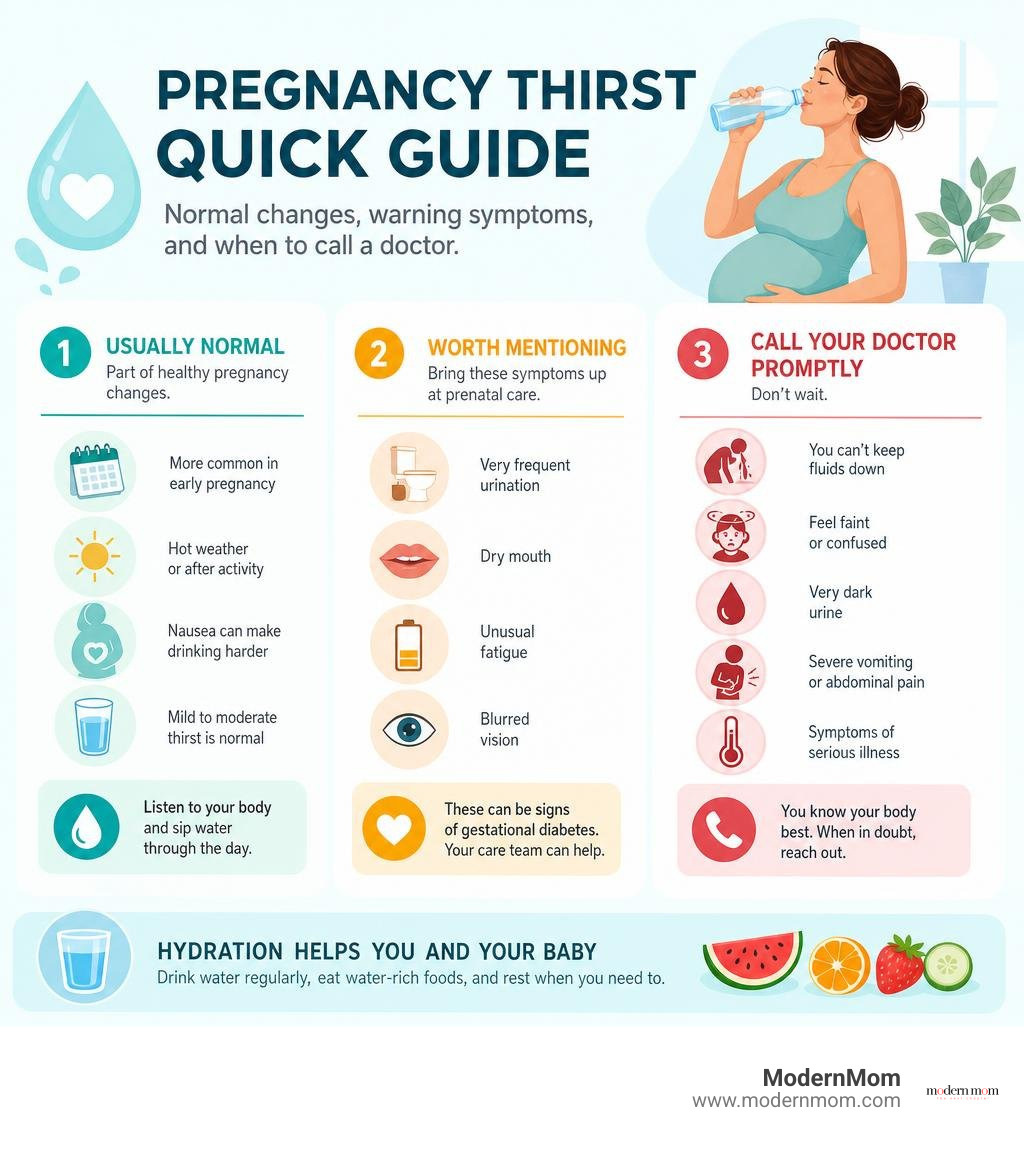
- Commonly Normal: Moderate thirst is expected, particularly during the first trimester, in warm climates, after light exercise, or if morning sickness makes it difficult to keep fluids down.
- Discuss at Your Next Appointment: Mention your thirst to your midwife or doctor if it is accompanied by frequent urination, a persistently dry mouth, extreme lethargy, or changes in your vision. These may be indicators of gestational diabetes, a condition affecting about 10% of pregnancies.
- Seek Prompt Medical Advice: Contact your care team immediately if you experience severe vomiting, dark-colored urine, dizziness, confusion, or sharp abdominal pain.
From the earliest weeks, pregnancy alters how your body manages its water supply. Total body water typically increases by 5 to 8 liters, and your blood plasma volume expands significantly. Additionally, pregnancy hormones reset your brain’s “thirst threshold,” meaning you may feel the urge to drink much sooner than you did before you were expecting.
Biological Reasons for Increased Fluid Needs While Expecting
As soon as conception occurs, your circulatory system begins an intensive transformation. To nourish the fetus, your maternal blood volume increases by 30% to 50%, requiring an additional 1.5 to 1.8 liters of fluid. To meet this demand, your body efficiently pulls water into your bloodstream.
Furthermore, your body produces roughly 800 grams of amniotic fluid to protect the baby. This fluid is not static; it is constantly being exchanged and filtered, necessitating a continuous intake of fresh water.
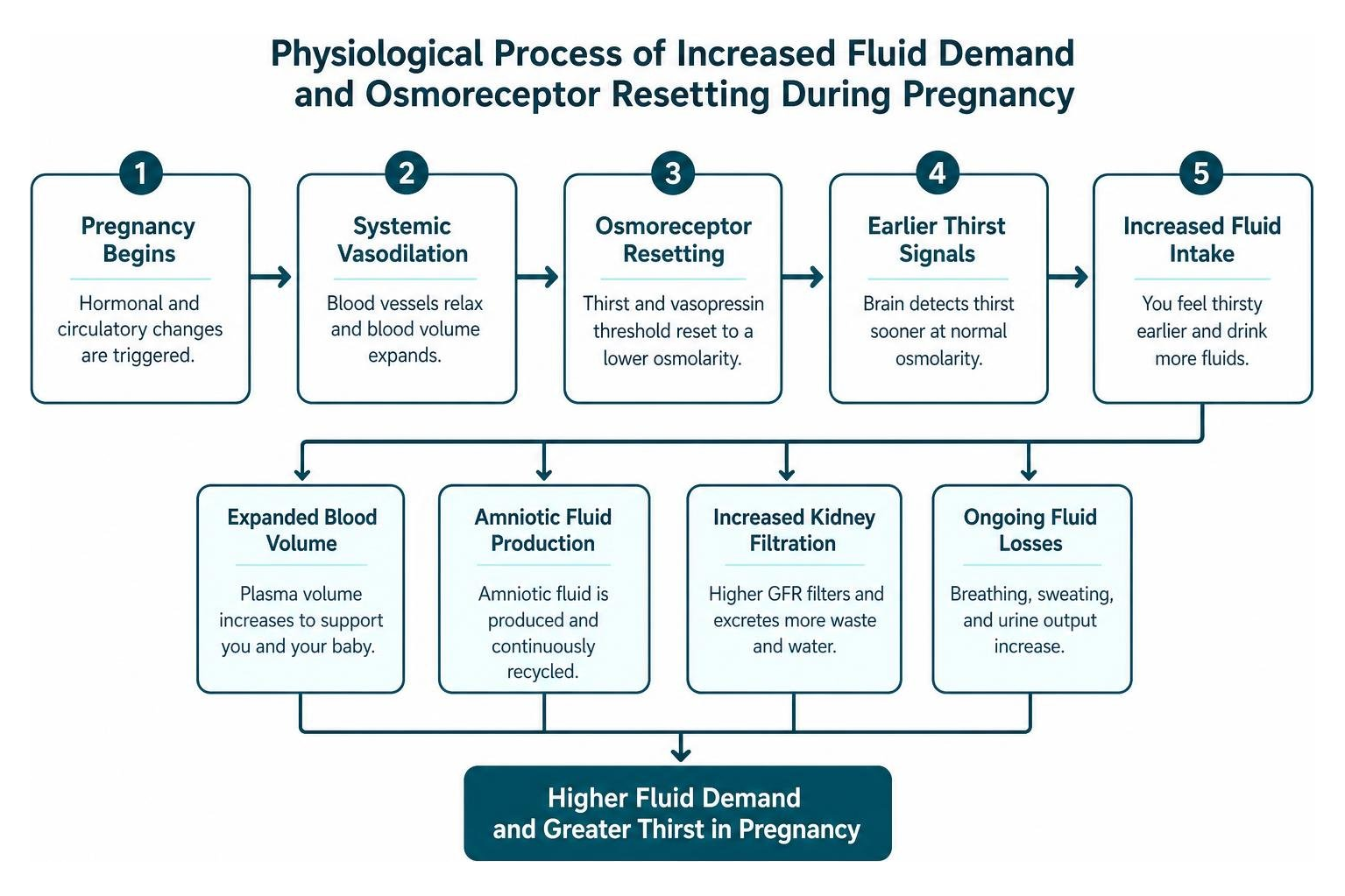
Hormonal fluctuations also play a role in hydration signals. Scientific data indicates that the brain’s “osmoreceptors”—the sensors that detect when you need water—are reset to a lower level during pregnancy. This means your brain triggers thirst even when your hydration levels would be considered normal in a non-pregnant state.
Your kidneys are also working overtime. The rate at which your kidneys filter blood increases by 50% to 80% during pregnancy. Between this rapid filtration and the moisture lost through increased breathing and skin evaporation, it is natural for your body to demand more fluids.
How Hydration Requirements Shift Each Trimester
In the first trimester, blood vessel expansion (vasodilation) often causes early thirst. This may happen alongside other symptoms like a metallic taste in the mouth or early morning nausea.
By the second trimester, fluid needs ramp up significantly to support the rapid growth of the baby and the peak expansion of your blood volume, which usually occurs between weeks 14 and 28.
In the third trimester, while your fluid needs are at their highest, physical space becomes limited. As the baby grows and presses against your stomach and bladder, you may find it more comfortable to take frequent, small sips of water throughout the day rather than drinking large amounts at once.
The Role of Hormones in Regulating Maternal Thirst
Two key hormones, relaxin and progesterone, are major drivers of pregnancy thirst. Relaxin causes your blood vessels to relax and widen. Your brain interprets this relaxation as a drop in blood volume, which triggers an immediate thirst signal to fill that extra space.
Meanwhile, progesterone can raise your internal body temperature, causing you to lose more moisture through sweat and respiration. These hormonal actions are vital for maintaining healthy blood flow to the placenta and ensuring your baby receives proper nutrients.
When High Thirst Indicates Gestational Diabetes
While thirst is usually normal, extreme or unquenchable thirst can sometimes point toward gestational diabetes mellitus (GDM). Statistics show that GDM affects approximately 10% of all pregnancies.
When blood sugar levels become too high, the body attempts to flush out excess glucose through urine. This process, called osmotic diuresis, pulls water from your body tissues, leading to dehydration and intense thirst, creating a cycle of constant drinking and bathroom trips.
Since GDM often presents with very subtle symptoms, healthcare providers typically perform routine glucose screening between 24 and 28 weeks of pregnancy.
Recognizing Warning Signs Beyond Normal Thirst
It is helpful to know the difference between the standard need for more water and potential signs of high blood sugar. You should discuss the following with your doctor:
- A “cotton mouth” sensation that does not improve after drinking.
- Frequent nighttime waking due to intense thirst and heavy urination.
- Fatigue that feels more severe than standard pregnancy tiredness.
- Repeated yeast infections or unexplained weight changes.
If your doctor is concerned, they will likely order a glucose challenge test to see how your body manages sugar intake.
Rare Medical Factors Contributing to Severe Dehydration
Occasionally, extreme thirst can be linked to rarer conditions. HELLP syndrome, a serious form of preeclampsia, can cause thirst alongside headaches, swelling, and upper abdominal pain. Another rare possibility is pregnancy-related diabetes insipidus, which affects how the kidneys conserve water.
Additionally, those suffering from hyperemesis gravidarum (severe morning sickness) are at high risk for electrolyte depletion. If you cannot keep any liquids down for more than 12 hours, you should seek medical help to prevent severe dehydration.
Daily Hydration Targets for a Healthy Pregnancy
Adequate hydration is a cornerstone of prenatal health. The Institute of Medicine suggests that pregnant women aim for approximately 3.0 liters (roughly 10 cups or 80–96 ounces) of total fluid intake daily.
Research indicates that many expectant mothers fall short of these targets, often drinking less than half of the recommended amount. Staying consistent with fluid intake is essential as your pregnancy progresses.
| Stage of Pregnancy | Average Intake in Studies | Recommended Target | Primary Fluid Driver |
|---|---|---|---|
| First Trimester | ~1336 mL / day | 2300–2700 mL / day | Hormonal Resets |
| Second Trimester | ~1477 mL / day | 2700–3000 mL / day | Blood & Amniotic Expansion |
| Third Trimester | ~1584 mL / day | 3000 mL / day | Fetal Growth Support |
While plain water should make up the majority of your intake, other options like pasteurized milk, clear broths, and decaffeinated herbal teas also count toward your daily goal.
Water-Rich Foods to Supplement Your Fluid Intake
You can also “eat” your water by incorporating hydrating fruits and vegetables into your diet. This is an excellent way to get essential vitamins while boosting fluid levels:
- Fruits: Watermelon, strawberries, oranges, and grapefruit are all over 90% water.
- Vegetables: Cucumbers, lettuce, celery, and zucchini are highly hydrating.
- Snacks: Fresh apples and sugar snap peas provide a crisp, hydrating crunch.
Potential Risks of Inadequate Hydration for Mother and Baby
Failing to drink enough water can lead to complications such as low amniotic fluid (oligohydramnios), overheating, and urinary tract infections. Dehydration can also cause “irritable uterus” symptoms, leading to an increase in Braxton Hicks contractions.
Checking your urine color is a simple way to monitor your status. A pale, straw-like yellow is the goal. If your urine is dark yellow or has a strong odor, it is a clear sign you need to increase your water intake immediately.
Balancing Electrolytes for Optimal Fluid Retention
Sometimes, drinking only plain water isn’t enough, especially if you are sweating or dealing with morning sickness. Losing minerals like sodium, potassium, and magnesium can leave you feeling thirsty despite drinking plenty of water.
Coconut water and bone broth are natural ways to replenish electrolytes. If you use commercial powders, look for those with minimal added sugar. Always consult your healthcare provider before adding electrolyte supplements to your daily routine.
Effective Ways to Stay Hydrated Throughout the Day
Developing a consistent routine is the best way to ensure you hit your hydration goals. Keep a reusable bottle in your car, at your desk, and on your nightstand so water is always accessible.
Many women find that digital tracking apps or smart water bottles help them stay on track. You can also use a pregnancy hydration calculator to determine a specific target based on your current weight and activity level. Simple habits, like setting an hourly phone alarm, can make staying hydrated a seamless part of your day.
Common Questions About Thirst in Pregnancy
Is increased thirst an early indicator of conception?
Yes, for many women, increased thirst is one of the first physical changes they notice. Early hormonal shifts cause your blood vessels to dilate, which signals the brain to increase fluid intake to help build your maternal blood supply.
What is the ideal daily water consumption for pregnant women?
Most experts recommend drinking 8 to 10 glasses (64–80 ounces) of pure water, with total daily fluids reaching 10 to 12 cups when including other beverages and water from food. You may need more if you are exercising or if the weather is particularly hot.
When should I talk to my OB-GYN about my thirst levels?
Schedule a talk with your provider if your thirst feels impossible to satisfy, or if it is paired with unusual exhaustion, blurred vision, or very frequent urination. Seek emergency care for signs of severe dehydration, such as fainting, the inability to keep fluids down, or sudden, extreme swelling.
Summary: Managing Your Hydration Journey
Navigating the many physical changes of pregnancy can be overwhelming, and feeling pregnant and always thirsty is a very common part of the process. In most cases, this is simply your body’s way of ensuring it has the resources necessary to support your growing baby and maintain a healthy blood volume.
By listening to your body’s cues, keeping water nearby, and focusing on hydrating foods, you can stay comfortable and healthy. Always trust your instincts—if your thirst feels out of the ordinary, reaching out to your healthcare provider for a quick check-up can provide peace of mind and ensure a healthy journey through motherhood.