





















Interactive financial literacy games serve as dynamic educational platforms that simulate real-world economic scenarios to build essential money management skills. These digital tools allow learners—ranging from elementary school students to adults—to master core concepts such as debt prevention, investment strategies, credit health, and strategic budgeting through immersive gameplay.
A Summary of Leading Financial Literacy Resources:
| Target Demographic | Recommended Games | Primary Educational Focus |
|---|---|---|
| Grades K-5 | Peter Pig’s Money Counter, Money Magic, Wise Pockets | Currency recognition, foundational budgeting, and saving habits |
| Grades 6-12 | Banzai, Financial Football, The Stock Market Game, STAX | Portfolio diversification, credit score impact, and loan management |
| Adults & College | SPENT, FDIC Money Smart, The Uber Game | Economic empathy, gig economy logistics, and survival budgeting |
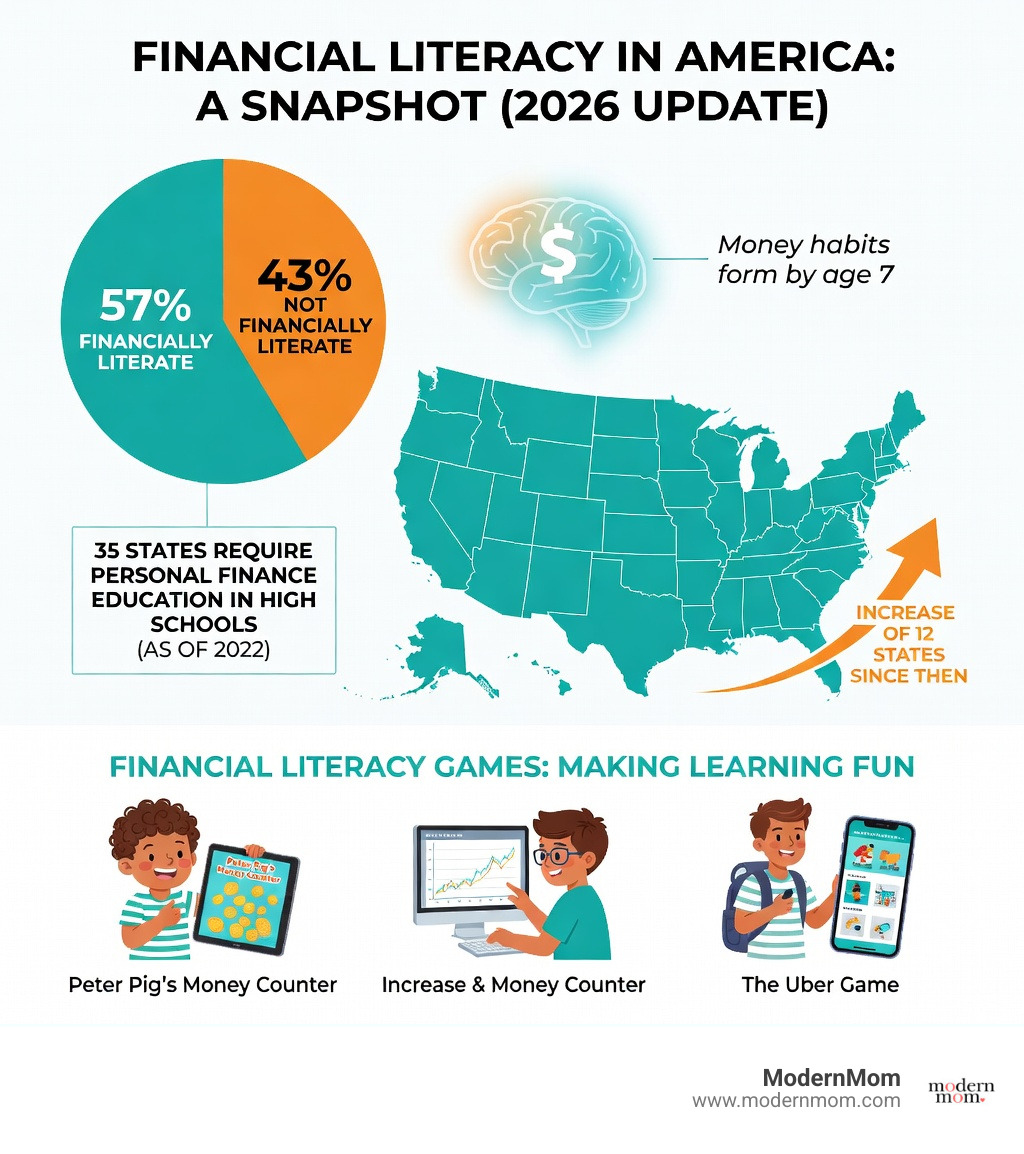
In an era where digital entertainment dominates, parents often struggle to limit screen time. However, shifting that focus toward educational games can transform a tablet into a powerful tool for teaching lifelong survival skills. Research indicates a pressing need for this shift: only 57% of adults in the U.S. are considered financially literate. Since foundational money habits often take root by age 7, early intervention is vital to prevent future financial instability.
Legislative changes reflect this urgency. As of 2022, 35 states have moved toward requiring personal finance courses in high school, with an additional 12 states adopting similar measures recently. While schools are beginning to prioritize these skills, families can reinforce these lessons at home through gamification. By replacing dry lectures on interest rates with engaging simulations—like managing a budget for a virtual journey—kids learn through experience and retain more information.
As a parent, you are your child’s first financial mentor. From discussing price differences at the supermarket to deciding how to allocate an allowance, every interaction is a teaching moment. These curated games and resources are designed to help you raise financially confident children with ease, whether you are helping a toddler identify nickels or guiding a teenager through the complexities of student financing.
The Benefits of Game-Based Financial Learning for Families
Traditional lectures about “the value of a dollar” often fail to resonate with children. Financial literacy games solve this by utilizing “experiential learning,” which allows kids to navigate financial pitfalls and make errors in a risk-free digital environment. This prepares them to handle real money with greater wisdom and caution.
Gamification simplifies intimidating topics like inflation or compound interest by turning them into interactive challenges. This method is highly effective for habit formation; when a child experiences the virtual benefit of choosing a cost-effective option in a game, they are more likely to apply that same logic during real-world shopping trips. These tools also develop critical thinking as kids learn to distinguish between “wants” and “needs” while witnessing the immediate results of their spending choices.
Engaging Money Games for Children in Grades K-5
For younger children, the objective is to master the basics: identifying currency, making change, and understanding that funds are limited. The following free resources are excellent for the elementary age group:
- Peter Pig’s Money Counter: This Visa-developed game teaches children to identify and add up U.S. coins. Success in the game earns them virtual currency to “spend” in a digital store, reinforcing the concept of working within a set budget.
- Money Magic: Centered on a character named Enzo the magician, this game highlights the tension between immediate gratification and long-term goals. Players must help Enzo save his earnings to reach a major performance milestone in Las Vegas.
- Wise Pockets: A long-standing resource that uses storytelling to explain money management. It includes helpful guides for parents to facilitate discussions alongside the gameplay.
- H.I.P. Pocket Change: Hosted by the U.S. Mint, this site provides games that explore the history of American currency and the fundamentals of saving.
Fun Money-Saving Activities to Try with Young Kids
- Coin Identification Matching: Help toddlers learn currency by tracing coins on paper and asking them to place the correct physical coin on each drawing.
- Home Grocery Store: Use pantry items and play currency to simulate a shopping environment, teaching children how to “pay” for items.
- The “Potatoes and Gravy” Analogy: Use this simple rule to explain priorities. Potatoes represent “needs” (shelter, basic food), while gravy represents “wants” (toys, treats). You must secure the potatoes before adding the gravy.
As students enter middle and high school, the complexity of their financial lives increases. They begin facing decisions regarding employment, vehicle ownership, and college tuition. Financial literacy games for this demographic shift focus from simple arithmetic to sophisticated life simulations.
Banzai is a premier resource used widely in classrooms. It places teens in realistic situations where they must manage taxes, rent, and unexpected expenses like car repairs. It serves as a practical “trial run” for adulthood. For those who enjoy sports, Financial Football integrates personal finance questions into a competitive football game, covering topics from identity theft to credit scores.
| Game Title | Average Play Time | Core Concepts Covered |
|---|---|---|
| STAX | 20 Minutes | Long-term investing, market volatility, and index funds |
| The Stock Market Game | Full Semester | Real-time trading simulations and portfolio management |
| Credit Clash | 10-15 Minutes | Loan interest, credit health, and borrowing impacts |
| Hit the Road | 15 Minutes | Travel budgeting and managing emergency costs |
How Gamification Empowers Teenagers to Manage Money
Teenagers value autonomy, and these simulations offer a glimpse into the independent life they desire. The game Payback is particularly eye-opening, as it tasks players with completing college while balancing a job and social life, all while attempting to minimize student debt.
Another impactful tool is Shady Sam, which takes a unique approach by putting the player in the role of a lender. By experiencing how high-interest rates benefit the business rather than the consumer, teens develop a healthy skepticism toward predatory lending and “fine print.”
Advanced Money Management for Students and Adults
Financial education isn’t just for kids; many adults benefit from a skills refresh. Given that a significant portion of the population struggles with basic financial concepts, these interactive tools can help grown-ups refine their own budgeting habits.
Games like SPENT provide a sobering look at economic hardship by challenging players to survive one month on a limited budget. It forces difficult choices between essential needs, such as healthcare versus utility bills. Similarly, The Uber Game explores the complexities of the gig economy, requiring players to manage household expenses and family needs while working as a full-time driver. These simulations are powerful for understanding the importance of an emergency fund and the realities of different economic lifestyles.
Reliable and Free Online Resources for Financial Literacy
High-quality financial education is available for free through several reputable organizations:
- FDIC Money Smart: Provides a robust suite of modules and quizzes designed to improve financial awareness for all age levels.
- NGPF Arcade: Created by Next Gen Personal Finance, this site features a variety of games addressing modern topics like insurance and cryptocurrency.
- Practical Money Skills: A comprehensive site from Visa that offers interactive games such as “Financial Soccer” alongside traditional lesson plans.
- Federal Reserve Education: The Fed offers structured resources like “Financial Foundations” which integrate money management with early entrepreneurship concepts.
Integrating Real-World Money Lessons into Daily Life
While digital tools are invaluable, hands-on experience in the real world reinforces these lessons. You can bridge the gap between gameplay and reality with these simple family activities:
- Budget Challenges: Give your child a small set amount at a thrift store or yard sale and let them decide how to maximize its value.
- Collaborative Savings: Use a visible jar to save for a family goal, such as a movie night. This demonstrates how small, consistent contributions lead to a larger reward.
- Household Transparency: Occasionally show older children the household utility bills. Explain the correlation between behavior (like leaving lights on) and the monthly cost.
- Smart Shopping: During grocery trips, involve your children in comparison shopping by asking them to find the best unit price for a specific product.
- The Value of Giving: Involve children in selecting a charity to support, teaching them that money can be a powerful tool for social good.
Common Questions Regarding Financial Education Games
Which free money games are most effective?
For the younger crowd, Money Magic and Peter Pig’s Money Counter are highly recommended. For older students, Banzai, Financial Football, and STAX offer deeper dives into complex economic concepts. All of these tools are free to access online.
In what ways do games teach budgeting skills?
Games utilize rewards, progression, and instant feedback to maintain engagement. They allow players to see the long-term effects of their spending and saving decisions in a compressed timeframe, making the consequences of debt or poor planning feel more tangible.
When is the right time to start teaching financial concepts?
You can begin as early as age 2 or 3 by helping children recognize different coins. Experts recommend starting early because most children have established their fundamental views on money by age 7.
Final Thoughts on Raising Financially Savvy Kids
Equipping your children with financial responsibility is a vital part of parenting, and it doesn’t have to be a dull or stressful process. By integrating financial literacy games into your family life, you provide your children with a significant advantage for their future security. Whether you are using a digital simulation or practicing comparison shopping at the store, these experiences foster the confidence and skills they need to thrive. From the first penny saved to the first major investment, every lesson counts toward a brighter financial future.